When an extractor reports that a cheque's figures and words do not match, the instinct is to treat it as an OCR error. Usually it is not.
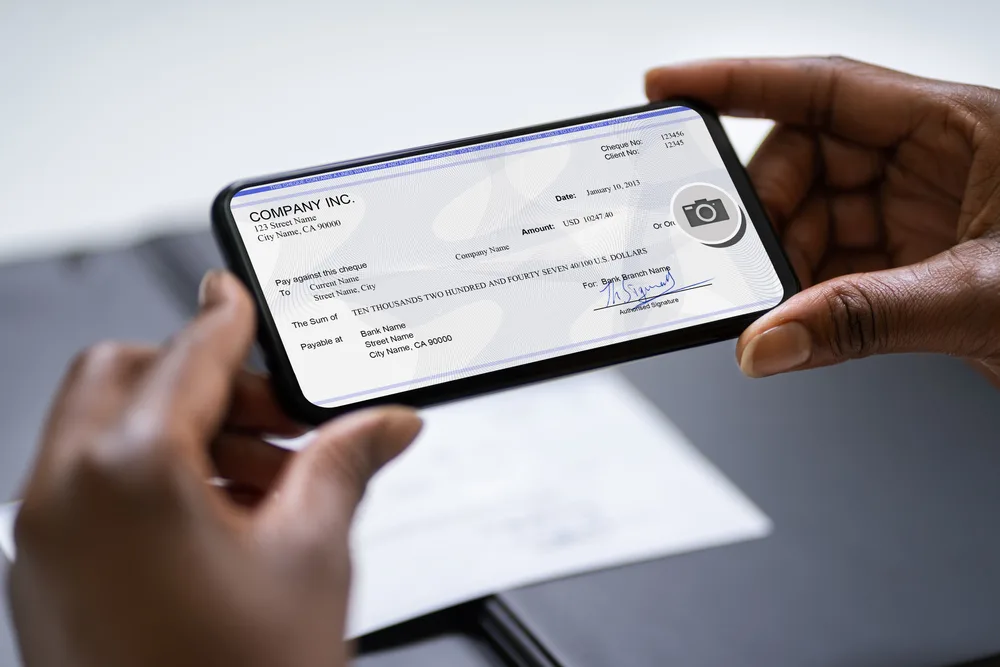
A cheque carries its amount twice: once in figures in the box, the courtesy amount or CAR, and once written out in words, the legal amount or LAR. Reading both and requiring them to agree is the most valuable check in cheque automation, because the two fields are written independently by the same hand and a model that misreads a digit will rarely misread the corresponding word the same way.
That is the mechanism. This is about the part nobody specifies: what happens on the days it fires.

Courtesy amount against legal amount
Three reasons the two fields differ
A mismatch has one of three causes, and they need different responses. Conflating them is why some banks end up treating every disagreement as a scanning problem.
| Cause | What it means | Right response |
|---|---|---|
| The model misread one field | An extraction error; the cheque itself is consistent | Human reads the image and corrects |
| The drawer wrote them differently | A genuine defect on the instrument | Banking rules decide; this is not a data problem |
| The document is unreadable in one field | Damage, overwriting, a fold through the amount box | Reject to review with the reason stated |
The middle row is the one that matters commercially and the one most systems handle worst. A cheque where the drawer genuinely wrote different amounts is not an exception your operations team can fix by looking harder at the scan. It is a defective instrument, and what happens next is a banking decision with a legal basis rather than a data-entry correction.
Which amount governs
Where the two genuinely differ, the long-standing rule in negotiable instruments law is that the amount written in words prevails over the amount in figures. The reasoning is practical rather than formal: words are harder to alter convincingly than digits, and a figure can be changed with a pen stroke in a way that "four hundred" cannot.
Oman's Commercial Law was issued by Royal Decree 55/90, and the provisions governing cheques and bills of exchange sit there. Confirm the operative article with your own counsel rather than taking it from an article like this one — the general principle is stable, but the specific wording, and what it obliges a paying bank to do, is what your process has to be built on.
It is worth separating that from practice. The legal rule tells you which amount is authoritative if the cheque is paid. It does not follow that a bank should pay it: returning the cheque marked for the discrepancy is common, and for good reason, since paying on a defective instrument invites a dispute the bank has no interest in joining. So an automated system should not silently resolve a mismatch by taking the words and continuing. That decision belongs to a person operating a policy.
What the extractor should actually output
The design point follows from the above: on a mismatch the system's job is to present, not to decide. Both readings, each with its own confidence, the cropped image of each field beside its value, and the fact of disagreement recorded as a flag on the item rather than resolved away.
The cropped images matter more than they sound. A reviewer given "CAR 450, LAR 400, mismatch" has to open the whole cheque and find both fields. A reviewer given those two numbers with the two corresponding strips of the original image directly beneath them resolves most cases in a couple of seconds, because the answer is usually visually obvious once you are looking at the right two centimetres of paper.
A system that reports only a single "amount" field with a confidence score has thrown away the most useful thing it knows. Two independent readings that agree are far stronger evidence than one reading with a high score, and the disagreement is itself a finding worth keeping.
Agreement is not proof, and the rate is a diagnostic
Two caveats keep this honest. First, CAR and LAR agreeing does not guarantee the amount is right — both can be misread in a compatible way, most plausibly when a decimal separator or a three-decimal rial amount is involved. Agreement raises confidence substantially; it does not close the question.
Second, the mismatch rate is a useful instrument in its own right. If it drifts upward with no change in intake, something has moved in the pipeline — a scanner setting, a new cheque stock, a model update — and the mismatch rate will usually notice before anyone else does. Watching it is close to free and it is the cheapest early warning available on a cheque line.
What to establish before committing
Confirm the system reads both amounts independently rather than reading one and using the other to check it — a pipeline that parses the words only when the figures look doubtful is not cross-validating. Establish that a mismatch produces a flagged item with both readings and both image crops, not a resolved single value. Confirm nothing silently applies the words-prevail rule on your behalf. Ask what happens when the words are unreadable but the figures are clear, since that is the common asymmetry and it should not be handled the same way as a genuine disagreement. And get the mismatch rate reported as a metric, because it is your early warning that something upstream has changed.
The honest summary
A CAR/LAR disagreement is the check succeeding, not the system failing. Handle it by presenting both readings with their evidence and letting a person apply policy, and the mismatch queue becomes a small, fast review rather than a source of arguments about whether the OCR is any good. This describes what a system should be able to show; the legal treatment of a defective instrument is a question for your own counsel.
Muscat Tech Solutions builds cheque extraction for banks and finance teams across Oman and the GCC, with Arabic and English handled as equals. To see how it presents a mismatch on your own cheques, talk to us.
Related posts
-
 Revolutionizing Cheque Processing with Powerful AI
Automatically extract and process cheque data quickly and accurately.
05 November 2025 -
 Revolutionizing Bank Statement Analysis with Powerful AI
Turning complex financial data into clear, actionable insights in seconds.
09 August 2025 -
 eKYC in Oman: What Happens Between the ID Scan and a Verified Customer
Four steps for the customer. Five separate judgements for the system, and one decision.
11 September 2026